


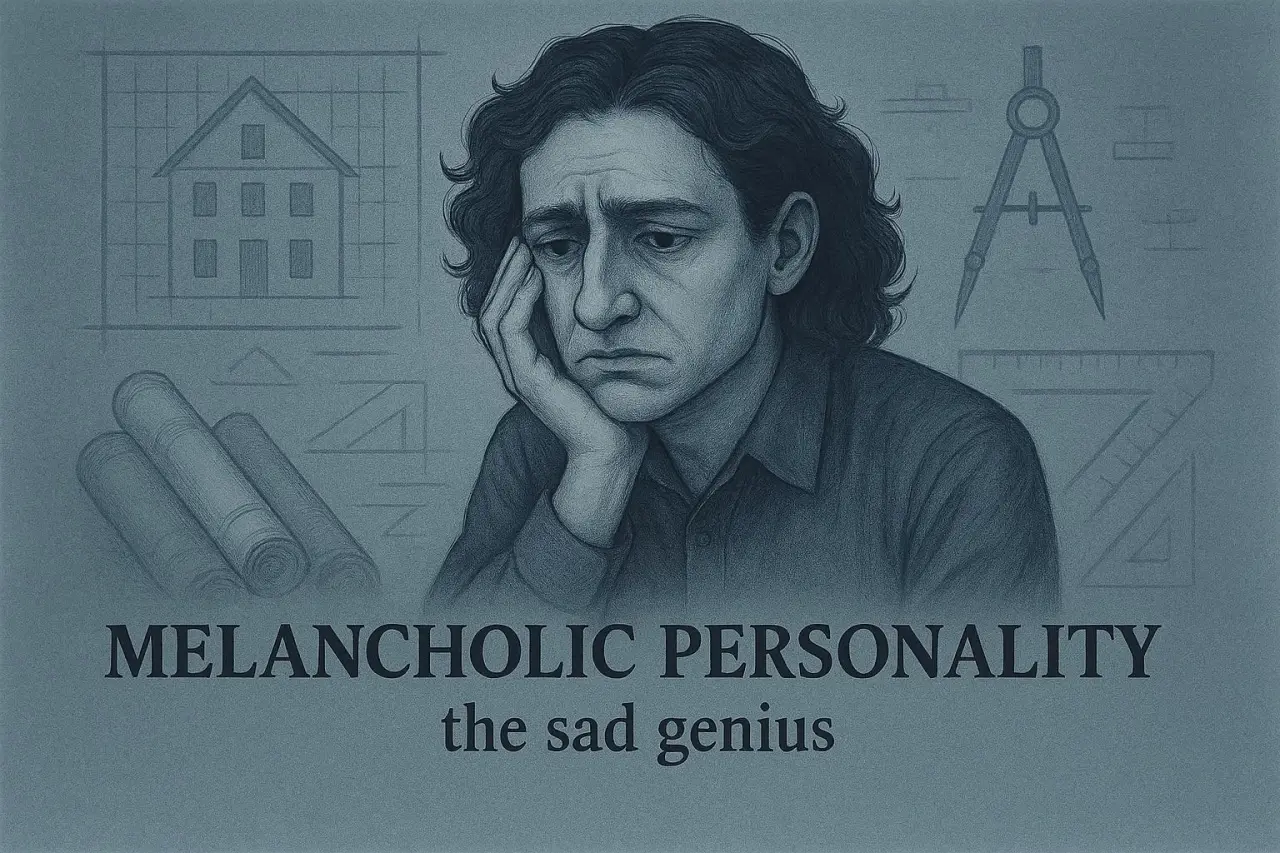
The Melancholic Personality: Depth, Genius, and the Beauty of Sadness
There is a quiet, moonlit corner of the human psyche where feelings run deep, thoughts spiral into intricate labyrinths, and beauty is found in the most bittersweet moments. This is the inner world of the melancholic personality. Far from being a simple synonym for depression, the melancholic temperament is one of the oldest and richest character frameworks in history, describing individuals who are analytical, self-sacrificing, and profoundly creative. They are the poets, the philosophers, the composers, and the meticulous planners who see the world not as it is, but as it could be—and often, they grieve the gap between the two.
The Roots of Sorrow: A History of the Four Temperaments
The concept of the melancholic personality originates not in modern psychology, but in ancient medicine. Around 400 BCE, the Greek physician Hippocrates proposed the theory of the four humors, suggesting that human behavior was dictated by the balance of bodily fluids: blood, yellow bile, black bile, and phlegm. An excess of black bile (from the Greek melas, "black," and khol?, "bile") was thought to cause a disposition marked by introspection, sadness, and a pensive spirit.
This proto-psychological model was later expanded by the Roman physician Galen, who transformed the humors into the four classic temperaments: Sanguine (social and pleasure-seeking), Choleric (ambitious and leader-like), Phlegmatic (calm and detached), and Melancholic (analytical and thoughtful). While the humor theory has long been discarded, its typological legacy persists. It serves as a metaphorical language that continues to resonate because it captures a cluster of human traits we intuitively recognize. The melancholic, in this framework, is not “ill” but constitutionally wired for depth.
The Core of the Melancholic Character: A Portrait in Traits
To understand a melancholic is to understand a beautifully self-contradictory nature. They are idealists perpetually disappointed by reality. They are introverts who crave deep, soul-connecting conversations. Here are the defining pillars of their personality:
1. Deep, Analytical Thought and Introspection
The melancholic mind is a deep-sea explorer. They are not content with surface-level information; they must dissect, analyze, and understand the underlying principles of everything they encounter. This makes them exceptional problem-solvers and critical thinkers who can foresee obstacles others miss. Their inner life is rich, filled with constant reflection, self-evaluation, and a running internal monologue that questions their own motives and the world around them.
2. A Devotion to Perfection and Quality
A melancholic’s motto might be, “If it’s worth doing, it’s worth doing flawlessly.” They hold themselves and others to exceptionally high standards. This is not out of arrogance but from a deep-seated love for the ideal. A messy spreadsheet, an imperfect chord progression, or an unjust rule will grate on their soul. When they produce something—a report, a painting, a dinner party—it will be curated, precise, and of the highest quality their time allowed. This perfectionism is their engine for genius but also their most frequent source of anxiety.
3. Emotional Depth and Sensitivity
To be melancholic is to feel the world with the volume turned up. They absorb the emotional atmosphere of a room instantly and can be deeply moved by art, music, or the suffering of a stranger. However, they rarely display this on their sleeve. Unlike the ebullient Sanguine, the melancholic guards their profound sensitivity, fearing it will be misunderstood or trampled. This leads to a rich but often private experience of both great joy and abiding sorrow. They are prone to what philosopher Søren Kierkegaard (himself a quintessential melancholic) called “the sickness unto death”—a kind of existential despair born from a keen awareness of life’s fleeting nature.
4. A Quiet, Often Introverted Disposition
While they can be engaging in small, trusted groups, melancholics are fundamentally energized by solitude. Socializing, especially with strangers or in loud environments, drains their battery quickly. They are not necessarily shy; they are simply selective, preferring the company of a single soulmate or a good book over a bustling party. Their quietness is often mistaken for aloofness or snobbery, but it is usually a mask for a mind that is busy observing, processing, and feeling out of place.
5. Devoted Loyalty and Self-Sacrifice
In relationships, a melancholic is a fortress of loyalty. They seek the ideal friend or partner and, once they find you, will sacrifice their own comfort, time, and resources for your well-being. They show love by remembering the small details, by anticipating needs, and by being a steady, unwavering presence in crisis. The price of their love, however, is a tendency to keep score internally and feel deeply wounded if their sacrifice is met with indifference or betrayal. Forgiveness is a conscious act for them, not a natural reflex, because the memory of the wound runs deep.
The Genius and the Curse: Strengths and Struggles
The melancholic’s traits are a double-edged sword. Their strengths are the source of human civilization’s most profound achievements:
- Creativity and Genius: History’s greatest melancholics—Charles Darwin, Vincent van Gogh, Emily Dickinson, Franz Kafka—transmuted their inner pain and intense observation into timeless works. The melancholic’s natural drift toward reflection allows them to connect disparate ideas in novel ways.
- Diligence and Precision: In a world of shortcuts, the melancholic is a master craftsman. They thrive in roles requiring deep focus, planning, and an eye for flawlessness.
- Empathy and Nuanced Understanding: Because they are so acquainted with their own suffering, melancholics have an extraordinary capacity to sit with others in their pain without trying to cheer them up, offering a profound, non-judgmental presence.
Yet these same gifts cast long, challenging shadows:
- The Tyranny of Perfectionism: The fear of not reaching their impossible standards can lead to chronic procrastination and “analysis paralysis.” A project may never see the light of day because it’s never quite “ready.”
- A Slide into Depression and Pessimism: The melancholic’s natural realism can curdle into pessimism. Their focus on what is broken, missing, or unfair makes them vulnerable to clinical depression, anxiety, and a harsh inner critic that tells them they are not enough.
- Social Isolation and Overthinking: A casual comment from a friend can spiral into a three-day analysis of what they “really” meant. Their dread of small talk and need for deep connection can lead to loneliness, creating a painful paradox: they yearn for intimacy but fear the vulnerability it requires.
The Melancholic in Love and Work
In relationships, the melancholic is a slow-burning, all-in partner. They are not drawn to casual flings; they seek a soulmate. They express love through deep listening, thoughtful gestures, and acts of service. Their ideal partner is someone who understands their need for quiet, doesn’t take their moody silences personally, and can gently coax them out of their spiraling thoughts with patience and logic, not dismissive cheerfulness. They clash intensely with partners who are chronically unreliable, emotionally shallow, or who dismiss their deep feelings as “too much.”
In the workplace, the melancholic is the organizational backbone. They excel in careers that reward deep work and analytical rigor, far from the chaos of the open-plan office. Natural professions include:
- The Analyst and Strategist: Accountant, data scientist, architect, engineer.
- The Creator and Philosopher: Writer, musician, art therapist, researcher, theologian.
- The Planner and Optimizer: Project manager, quality assurance specialist, editor, surgeon.
- They struggle in roles that require high-energy social performance, constant networking, or rapid-fire decision-making without time for reflection. A melancholic salesperson, for instance, would feel soul-crushed by a role that demands emotional surface-acting all day.
Living Well: Practical Wisdom for the Melancholic Soul
For the melancholic, life is not about being “fixed” into a sanguine mold. It is about building a life that honors their depth while managing their mind’s gravitational pull toward the darkness.
- Schedule Time for Beauty, Not Just Analysis. Your soul is fed by aesthetics. Regularly visit art galleries, walk in nature at dawn, or listen to a symphony with your eyes closed. This isn’t indulgent; it’s essential fuel that transforms raw sadness into sublime meaning.
- Use a “Finished, Not Perfect” Mandate. Combat perfectionism by giving yourself permission to produce “B+” work. Set micro-deadlines. Ship the project. The relief of completion is a greater teacher than the endless pursuit of an unattainable ideal. Remember, a beautiful sketch is better than an unpainted masterpiece.
- Curate Your Social Circle to One or Two Confidants. Stop trying to be a social butterfly. Your strength is depth, not breadth. Invest fiercely in one or two relationships where you can be completely, unabashedly yourself. Protect these connections and let go of the guilt of not having fifty casual friends.
- Move the Body to Quiet the Mind. A ruminating mind can be a torture chamber. Physical movement—solo running, swimming, yoga—creates a somatic break from the cycle of thought. It grounds your keen intelligence back into the physical present, where problems often shrink down to their manageable size.
- Create a “Done List,” Not a “To-Do List.” At the end of the day, your inner critic will compile a damning list of everything you failed to do. Counteract this by writing down everything you did accomplish, no matter how small. This practices a quiet, defiant gratitude against the tide of self-criticism.
The Lasting Echo of the Melancholic
The melancholic temperament is a profound gift to humanity. In a culture that often prizes speed over depth and relentless positivity over honest emotion, the melancholic stands as a custodian of gravity, depth, and beauty. They remind us that the minor key is as essential to the symphony of life as the major one. Their sorrow is not a flaw to be medicated away but often a wellspring of insight, art, and unwavering love. To be melancholic is to walk through life with a heart both heavy and full—a heart that knows the world is broken, yet loves it fiercely anyway.

