


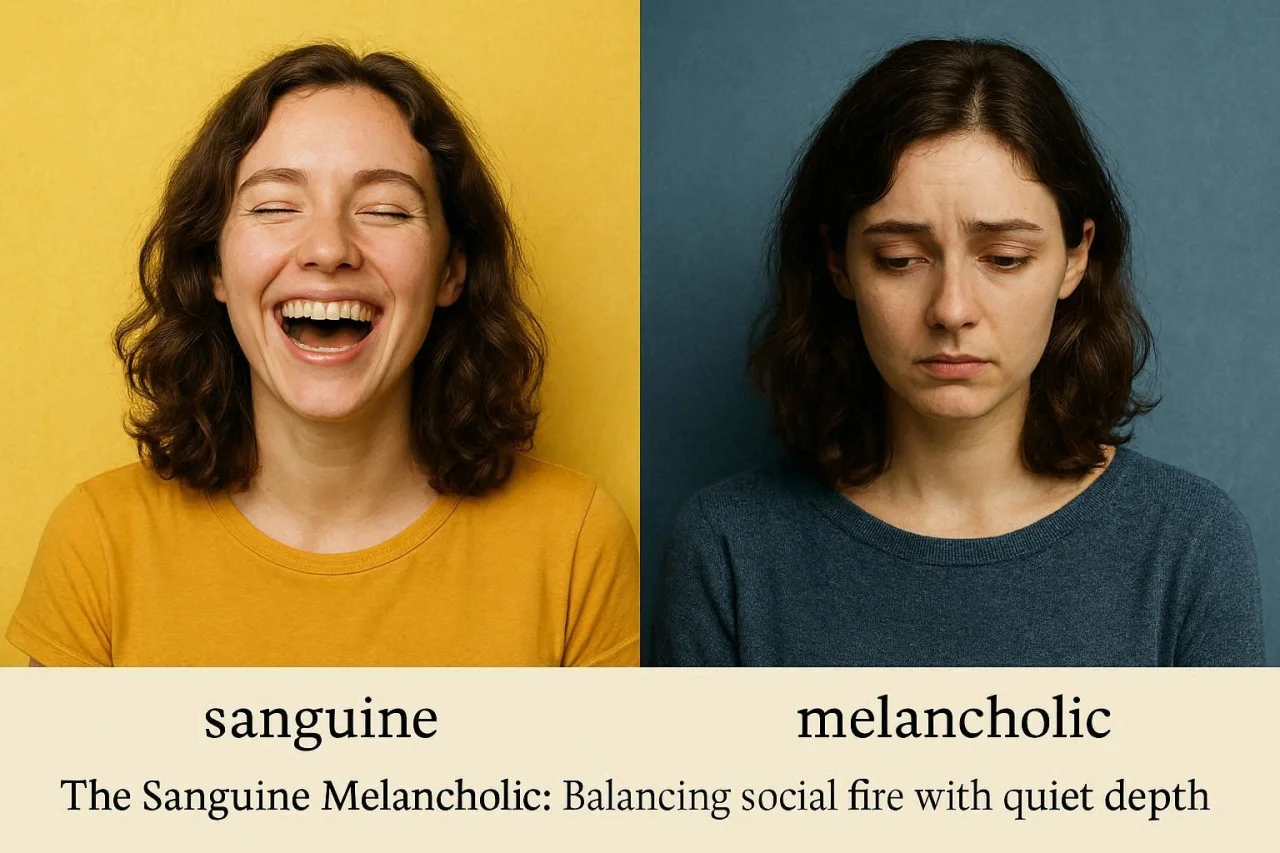
The Sanguine Melancholic: Balancing Social Fire with Quiet Depth
Introduction
In the rich tapestry of personality typology, the ancient Four Temperaments theory—rooted in Hippocratic medicine—continues to offer valuable insights into human behavior. While pure temperament types exist in theory, most individuals display a blend of two dominant temperaments. Among these combinations, the Sanguine Melancholic stands as perhaps the most fascinating and paradoxical: a personality that seamlessly (and sometimes chaotically) weaves together extroverted enthusiasm with introverted depth, social magnetism with solitary reflection.
This article explores the Sanguine Melancholic in depth—examining its origins, core characteristics, strengths, struggles, relationship dynamics, career paths, and strategies for personal growth.
The Four Temperaments: A Brief Foundation
Before diving into the blended type, a quick refresher on the four foundational temperaments:
- Sanguine (Air): Extroverted, talkative, enthusiastic, social, pleasure-seeking, optimistic
- Choleric (Fire): Extroverted, ambitious, leadership-oriented, goal-driven, impatient
- Melancholic (Earth): Introverted, analytical, detail-oriented, loyal, perfectionistic, prone to worry
- Phlegmatic (Water): Introverted, calm, peaceful, consistent, conflict-avoidant, kind
The Sanguine Melancholic, as the name suggests, draws primary traits from the Sanguine and secondary traits from the Melancholic. However, calling either "primary" can be misleading—the two temperaments exist in dynamic tension, each moderating the other.
The Core Paradox: Two Worlds Living in One Person
The Sanguine Melancholic lives with an internal dichotomy that others often find confusing. At a party, they might be the life of the celebration—telling stories, laughing loudly, moving from group to group. But after two hours, they may retreat to a quiet corner or leave early, exhausted and craving solitude where they can process the evening's events with analytical precision.
This push-pull defines their existence. The Sanguine part craves stimulation, novelty, and social connection. The Melancholic part demands structure, meaning, and alone time. Neither side wins permanently. The result is a personality that can appear inconsistent or moody to outsiders but feels internally coherent to those who understand the temperament's dynamics.
Key Characteristics of the Sanguine Melancholic
The Sanguine Influence
Socially Magnetic: They genuinely enjoy people and possess natural charm. Their enthusiasm is contagious, and they can make strangers feel like old friends within minutes. Unlike pure Sanguines who may be superficial in their socializing, the Sanguine Melancholic combines warmth with genuine interest in others' inner worlds.
Verbally Expressive: They love to talk, but unlike the Choleric who lectures or the pure Sanguine who rambles, the Sanguine Melancholic's speech often has substance. They tell stories richly, with attention to emotional detail and sensory specifics.
Optimistic but Realistic: Their Sanguine nature provides a default glass-half-full outlook, but the Melancholic component injects healthy skepticism. They hope for the best while quietly preparing for worst-case scenarios.
Enjoys Variety: Routine can feel suffocating. They need new experiences, people, and challenges to feel alive—but with the important caveat that these new things must have depth and meaning.
The Melancholic Influence
Deeply Analytical: While Sanguines skim surfaces, the Melancholic side dives deep. Sanguine Melancholics overthink everything: social interactions, work projects, personal decisions. They replay conversations in their heads, analyzing what was said and what it meant.
Detail-Oriented: Their work shows care and precision. They notice the small things others miss—a typo, a mismatched color, a subtle shift in someone's tone of voice. This makes them excellent editors, critics, and quality controllers.
Emotionally Complex: Pure Sanguines feel emotions quickly and move on. Pure Melancholics feel deeply and hold on. The Sanguine Melancholic experiences intense emotional highs and lows, often swinging between exuberant joy and pensive melancholy within a single day.
Values Authenticity: Superficial relationships or hollow achievements leave them unfulfilled. They seek real connection, meaningful work, and authentic self-expression.
Perfectionistic: This is perhaps their greatest burden. The Sanguine side wants to start projects with enthusiasm; the Melancholic side refuses to accept anything less than excellence. The result? Many brilliant projects never see completion because they can never be "perfect enough."
Strengths That Set Them Apart
1. The Best of Both Worlds
Few personality types can navigate both the boardroom and the artist's studio, the cocktail party and the quiet study. Sanguine Melancholics can lead with charisma and follow with precision. They can inspire a team with vision and then sit alone late into the night perfecting the details.
2. Creative Goldmines
Some of history's greatest artists, writers, and musicians likely embodied this temperament. They possess the Sanguine's creative spark and emotional expression combined with the Melancholic's craft, discipline, and ability to revise. They don't just have ideas—they have the patience to execute them well.
3. Empathetic Yet Objective
Their emotional range allows them to genuinely feel what others feel, while their analytical side prevents them from being completely consumed by those emotions. This makes them exceptional friends, therapists, mediators, and leaders who can hold space for emotion without losing perspective.
4. Excellent Communicators
They speak with warmth and clarity, listen with genuine interest, and write with precision and flair. Whether giving a presentation, writing an email, or having a difficult conversation, they communicate effectively because they consider both the emotional impact and the factual content.
5. Self-Aware
The Melancholic tendency toward introspection, combined with the Sanguine's willingness to discuss feelings openly, creates remarkable self-awareness. They generally understand their own patterns, triggers, and needs—even if they struggle to always manage them.
Common Struggles and Challenges
The Energy Rollercoaster
Sanguine Melancholics often describe feeling like they have two different energy batteries—a social battery and a solitary battery—and both drain unpredictably. A morning of deep, focused work might leave them craving social interaction by afternoon. A weekend of parties might require a full Monday of isolation to recover.
Decision Paralysis
The Sanguine side wants to make quick decisions (especially about fun things). The Melancholic side wants to analyze every possible outcome. The result can be frustrating indecision, particularly for significant life choices about relationships, careers, or major purchases.
The Unfinished Masterpiece
Their perfectionism, combined with the Sanguine's tendency to chase new shiny objects, leads to a graveyard of unfinished projects. They start novels, businesses, art pieces, home renovations, and fitness regimens with tremendous enthusiasm—only to stall when the work becomes tedious or the results fall short of their impossibly high standards.
Social Burnout with Guilt
Unlike pure introverts who feel no guilt about declining invitations, Sanguine Melancholics genuinely love people and want to be social. When their Melancholic side demands solitude, they often feel conflicted—canceling plans generates guilt, but forcing social interaction generates exhaustion and resentment.
Overthinking Relationships
Every text message gets analyzed. Every shift in a friend's tone becomes a puzzle. Did they mean something by that pause? Was that joke a subtle criticism? Their Sanguine side craves abundant social connection, but their Melancholic side reads deeply into every interaction, sometimes finding problems that don't exist.
Mood Fluctuations
Outsiders may perceive them as "moody" or "unpredictable." One day they're bubbly and planning adventures; the next they're quiet and introspective. Unless they communicate their temperament openly, partners and friends may take these shifts personally.
The Sanguine Melancholic in Relationships
Romantic Partnerships
What They Need in a Partner:
- Someone who understands their need for both social time and solitude
- A partner who doesn't take their mood shifts personally
- Intellectual stimulation combined with emotional warmth
- Tolerance for their perfectionism (without enabling it)
- Loyalty and depth—surface-level connections won't satisfy them
Compatibility Notes:
- With another Sanguine Melancholic: Potentially wonderful but volatile—two people with shifting energy needs can struggle to synchronize
- With Phlegmatic: Often excellent—the Phlegmatic's stability and patience provide a calming anchor
- With Choleric: Can work if the Choleric respects their need for processing time and doesn't dismiss their emotional depth
- With pure Sanguine: Fun but exhausting—the pure Sanguine may never understand the need for solitude
- With pure Melancholic: Too heavy—both may spiral into mutual overthinking without the Sanguine's lightness
Friendships
Sanguine Melancholics collect friends easily but maintain few close ones. They have the social skills to be well-liked by many but the discerning standards to only truly trust a handful. Their closest friends are usually those who can handle both their enthusiastic highs and their melancholy lows—people who don't require them to perform happiness when they're not feeling it.
They are exceptional friends: loyal, thoughtful, emotionally present, and fun. But they require friends who understand that "no, I can't hang out tonight" isn't rejection—it's self-preservation.
Family Dynamics
As children, Sanguine Melancholics often confuse parents. They may be outgoing and popular at school but then retreat to their room for hours to read, draw, or simply think. Parents who recognize this as temperament rather than moodiness can support their child's need for both social engagement and solitary recharge.
As parents themselves, they bring warmth, creativity, and high standards. They play with enthusiasm but also enforce rules with thoughtfulness. Their challenge is not projecting their perfectionism onto their children and allowing their kids to develop their own temperaments.
Career Paths and Work Style
Ideal Work Environments
The Sanguine Melancholic thrives in environments that offer:
- Variety without chaos (different tasks, but not constant interruption)
- Autonomy with collaboration (time for independent deep work plus meaningful team interaction)
- High standards with realistic deadlines (perfection expected, but time to achieve it)
- Creative expression with practical application (ideas that actually get built)
Natural Career Matches
Creative Fields:
- Writer/Author (the Sanguine provides voice; the Melancholic provides revision)
- Graphic Designer
- Architect
- Film Director
- Musician/Composer
- Advertising Creative Director
Helping Professions:
- Therapist/Counselor (warmth + analytical insight is a powerful combination)
- Teacher (especially subjects that combine creativity with structure, like literature or history)
- Physician (particularly specialties requiring both bedside manner and diagnostic precision)
- Life Coach
Analytical Roles with People Contact:
- User Experience Designer
- Marketing Strategist
- Editor
- Research Psychologist
- Human Resources Specialist
Entrepreneurship: Many Sanguine Melancholics make excellent solo entrepreneurs or small business owners. They have the vision to start, the charm to sell, and the attention to detail to deliver quality. However, they should partner with someone who handles operations and project management, as their perfectionism and tendency to start new projects can derail execution.
Careers to Approach with Caution
- High-pressure sales (the rejection may feed their Melancholic tendency toward rumination)
- Repetitive manufacturing or data entry (their Sanguine side will wither)
- Emergency medicine or crisis response (they may struggle to compartmentalize traumatic events)
- Lonely solitary work (long-term isolation will depress their Sanguine side)
Famous Figures Who Exemplify the Sanguine Melancholic
While we cannot diagnose historical figures with certainty, many exhibit the classic signs:
Prince: The late musician combined electrifying, sensual showmanship (Sanguine) with meticulous perfectionism in the studio and deep emotional complexity (Melancholic).
Audrey Hepburn: Elegant and warm in public (Sanguine), but known for her introspective nature, private struggles with war trauma, and dedication to detail in her humanitarian work (Melancholic).
Kurt Vonnegut: His writing blends playful, dark humor with profound melancholy and precise craftsmanship—the Sanguine Melancholic voice perfectly captured.
Fred Rogers: Warm, welcoming, and consistently kind to every person he met (Sanguine), yet deeply introspective, perfectionistic about his show's details, and prone to quiet reflection (Melancholic).
Personal Growth Strategies
For Sanguine Melancholics Themselves
1. Embrace "Good Enough"
Your perfectionism will kill more projects than your lack of skill ever could. Practice intentional imperfection. Set a timer. Finish something and declare it done, even if it's not perfect. Ship it anyway.
2. Schedule Both Social and Solitary Time
Don't leave your energy management to chance. Block time for both categories in your calendar. When your social battery drains, remind yourself that scheduled solitude isn't antisocial—it's maintenance.
3. Capture and Commit
Your Sanguine side loves starting new things. Your Melancholic side hates leaving things unfinished. Before starting any new project, ask: "Am I willing to finish this even when it becomes tedious?" If yes, commit. If no, add it to a "someday" list instead of starting.
4. Limit Decision Fatigue
Create systems that reduce small decisions. Meal prep. A capsule wardrobe. Routine mornings. Save your analytical energy for decisions that actually matter.
5. Communicate Your Temperament
Tell people close to you: "I have this personality type. Sometimes I'm social; sometimes I need to disappear. Neither means I love you less. Neither means something is wrong." Explicit communication prevents misunderstanding.
6. Journal Through the Overthinking
When you catch yourself replaying a conversation for the third time, write it down. Externalizing the analysis often reveals how unnecessary it is—and even if it doesn't, getting it on paper gets it out of your head.
For People Who Love a Sanguine Melancholic
1. Don't Chase Their Moods
When they retreat into solitude, don't assume you've done something wrong. Ask once: "Is everything okay between us?" If they say yes, believe them and give them space.
2. Appreciate Both Sides
Celebrate their social brilliance and their quiet depth. If you only praise one side, they'll feel unseen.
3. Help Them Finish
Gently ask about their unfinished projects. Offer to help with the tedious final steps—proofreading, organizing, scheduling. Sometimes an external push is all they need to cross the finish line.
4. Don't Rush Their Decisions
They need time to analyze major choices. Pressuring them for an answer will trigger defensiveness and anxiety. Give them a deadline if one exists, but respect their process.
5. Hold Them Accountable Gently
When their perfectionism paralyzes them, ask: "What would 'good enough' look like here? Can we do that?" Help them calibrate standards to reality.
Conclusion: The Gift of Duality
The Sanguine Melancholic personality is not a contradiction to be resolved but a duality to be embraced. These individuals possess a rare capacity to experience life in full color—the joy of connection and the richness of solitude, the thrill of creation and the satisfaction of refinement, the warmth of emotion and the clarity of analysis.
Their challenge is not becoming one pure temperament or the other but learning to honor both voices within. When they succeed, they become some of the most interesting, effective, and beloved people in any room—able to lead with charisma and follow with integrity, to dream wildly and execute precisely, to laugh fully and feel deeply.
The Sanguine Melancholic reminds us that personality is not about choosing who we are but about integrating all that we are. In a world that often demands consistency, they offer something more valuable: the courage to be complex.
Understanding your temperament is a tool for growth, not a box for limitation. Whether you identify strongly with the Sanguine Melancholic or simply recognize elements of it in yourself, the goal is always the same: greater self-awareness, compassion for your patterns, and the freedom to become the most integrated version of who you already are.

